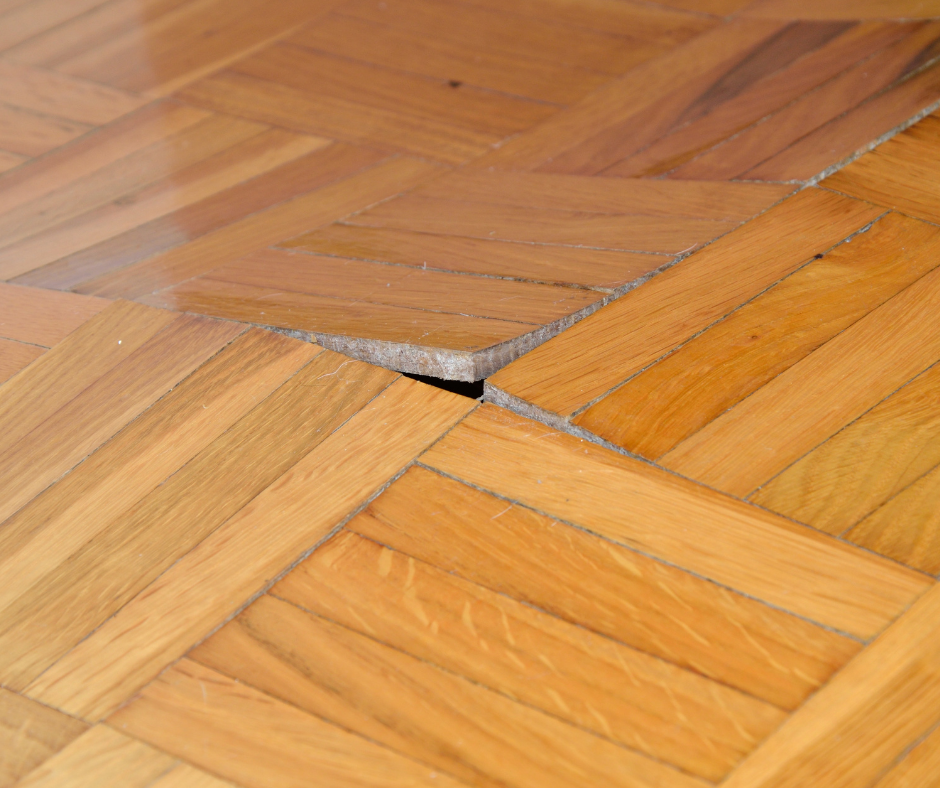
Dealing with warped wooden floors can be a bit frustrating. As a professional floor sander at Done Right Flooring, I’ve encountered my fair share of warped floors, and I’m here to share some tips on how to fix them. Whether it’s caused by moisture, improper installation, or natural aging, we’ll walk you through the process of bringing your wooden floors back to their original charm.
Floor Warping
Warping in wooden floors can happen because of moisture, temperature changes, and humidity shifts. Too much moisture can make the wood swell, causing cupping or buckling. Low humidity can lead to shrinking, leaving gaps or crowning. Temperature changes can also affect the wood’s stability, adding to warping over time.
To fix floor warping, find out what’s causing it first. If it’s because of moisture, like leaks or high humidity, deal with that first. Fix leaks, improve ventilation, and use dehumidifiers to control moisture. Also, make sure the wood acclimates before installing it and keep indoor humidity consistent to prevent future warping.
Temperature changes can also cause floor warping. Installing a good HVAC system and reducing direct sunlight exposure can help control temperatures. Adding rugs or mats to busy areas can also protect against temperature and moisture changes.
Understanding why floors warp and finding the right solutions can bring them back to their original shape. Let’s check out some effective ways to fix warped wooden floors and make your space beautiful and functional again.
Ready to Restore Your Floors? Get a Free Quote Now!
Assessing the Damage
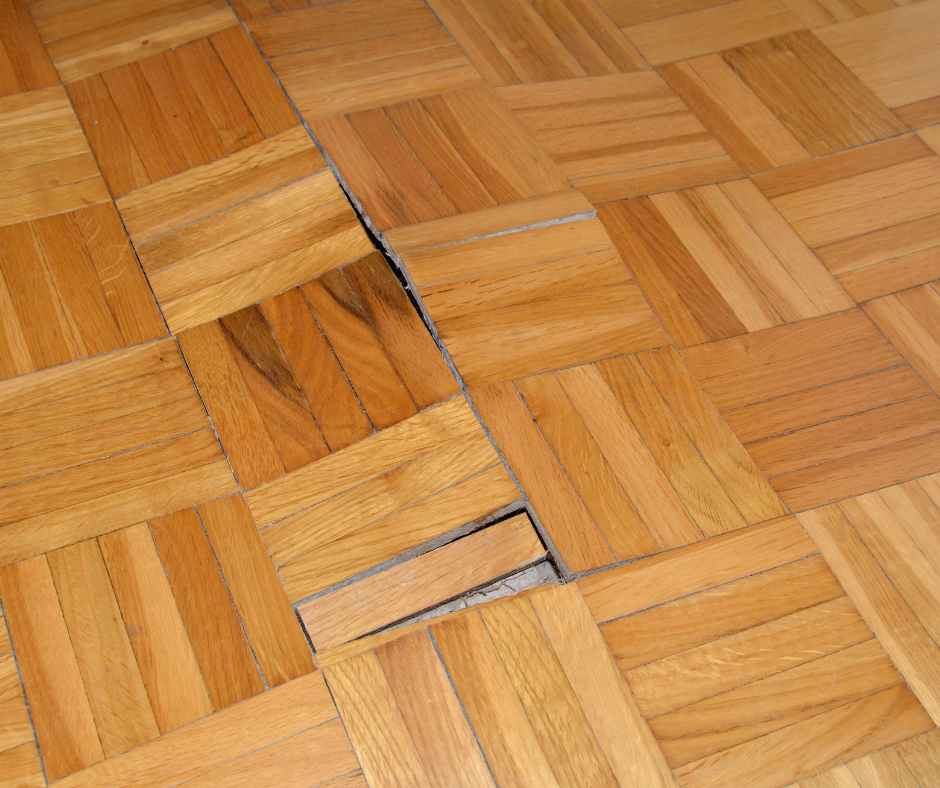
When dealing with warped wooden floors, start assessing the damage. Signs like buckling, cupping, or crowning can reveal underlying issues. By checking the affected areas, we can see if the warping is only in certain spots or if it affects the whole floor.
Localised warping might come from spills or leaks in the subfloor, while widespread warping could be due to high humidity or temperature changes. Knowing the extent of the damage helps us plan repairs better.
We’ll also look at the floorboards and subfloor for structural issues. Addressing water damage, rot, or mold promptly prevents more problems. We’ll also consider the type of wood used and how it reacts to different conditions.
Assessing the damage thoroughly, we can make a repair plan that suits your wooden floors. Whether it’s fixing local warping or preventing widespread issues, our aim is to make your floors sturdy and attractive again.
Repair Techniques
Repairing warped wooden floors requires a strategic approach tailored to the type and extent of the warping. We’ll explore various techniques for correcting different types of warping, such as:
Addressing Moisture Issues: If the warping is caused by moisture, we’ll start by identifying and resolving the underlying moisture problem. This may involve fixing leaks, improving ventilation, or installing a vapor barrier to prevent moisture from reaching the wood.
Flattening Cupped or Buckled Boards: For cupped or buckled boards, we’ll use techniques such as sanding or planing to level the surface. This process removes excess wood from the raised areas, allowing the boards to lay flat again.
Straightening Crowning Boards: Crowning occurs when the center of a board is higher than the edges, creating a raised ridge. To correct crowning, we’ll carefully sand or plane the center of the board to bring it level with the edges, restoring a flat surface.
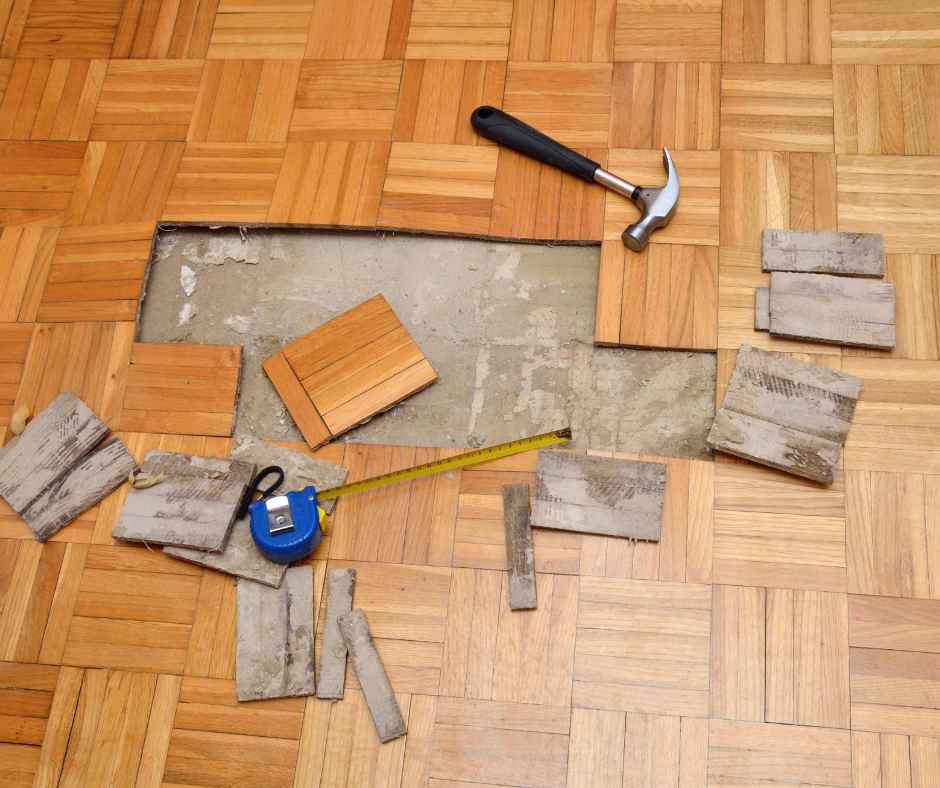
Replacing Damaged Boards: In cases where the warping is severe or the boards are irreparably damaged, we may need to replace affected boards entirely. This ensures a uniform appearance and restores the structural integrity of the floor.
Each repair method is chosen based on the specific characteristics of the warped wooden floor and aims to achieve a flat, level surface. Addressing the underlying cause of the warping and choosing appropriate repair techniques, we can restore the floors to their original beauty.
Seeing Floor Warping? Don’t Wait! Request Your Free Quote Today at Done Right Flooring!
Prevention Tips
Preventing wooden floor warping requires proactive measures to mitigate potential causes. Here are some effective prevention tips:
Maintain Consistent Humidity Levels: Fluctuations in humidity can cause wood to expand and contract, leading to warping. Use a humidifier or dehumidifier to maintain stable indoor humidity levels, ideally between 40% and 60%.
Use Moisture Barriers: In moisture-prone areas like kitchens or bathrooms, consider installing moisture barriers such as vapor barriers or waterproof underlayments beneath your wooden floors. These barriers help prevent moisture from penetrating the wood.
Ensure Proper Installation Techniques: Proper installation is important to preventing floor warping. Ensure that wooden floors are acclimated to the environment before installation, and use appropriate installation methods to minimise the risk of warping.
Conclusion
Warped wooden floors can be frustrating, but they’re fixable and preventable. Understanding why they warp, checking the damage, and using the right repair methods can bring your floors back to life. Also, keeping humidity levels stable, using moisture barriers, and installing floors correctly can prevent future warping. With the right know-how and proactive steps, you’ll enjoy beautiful, long-lasting wooden floors.