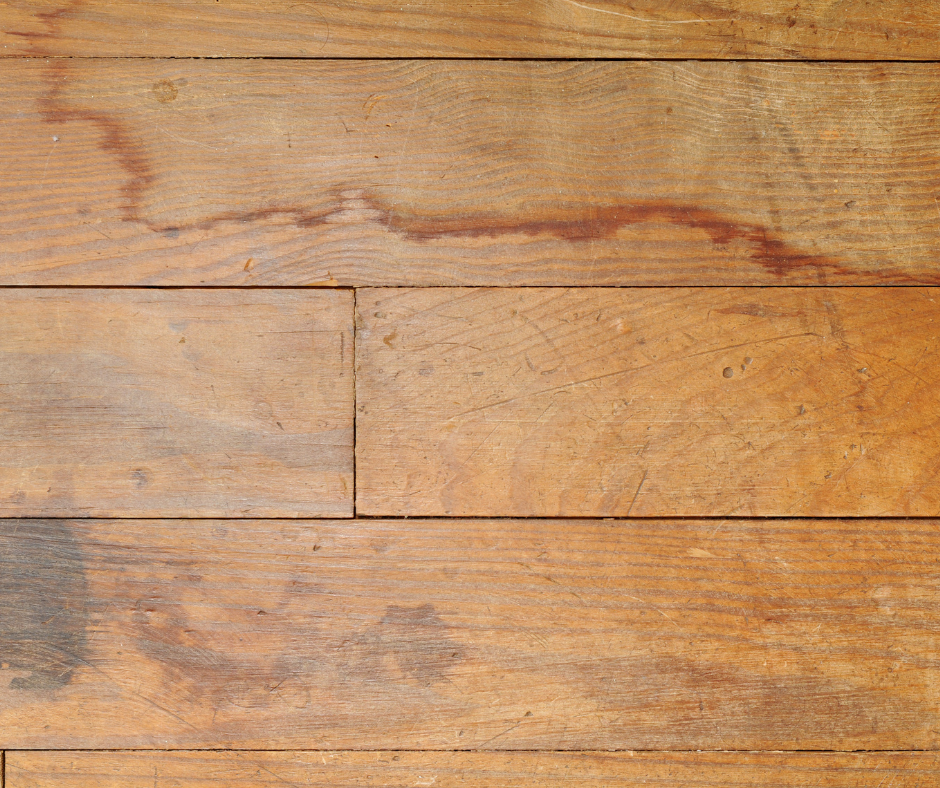
Staining your wooden floors can be a common mishap, but it doesn’t have to spell disaster. In this guide, we’ll cover the essential steps for effectively dealing with stains on wooden floors.
Whether it’s a spill or a stubborn mark, understanding the right techniques can help you restore your floors to their pristine condition.
Wooden Floor Stains
Let’s take a look into the various types of stains that wooden floors can encounter. It’s essential to identify the specific type of stain you’re dealing with to determine the most suitable removal method. Here are some common types of stains:
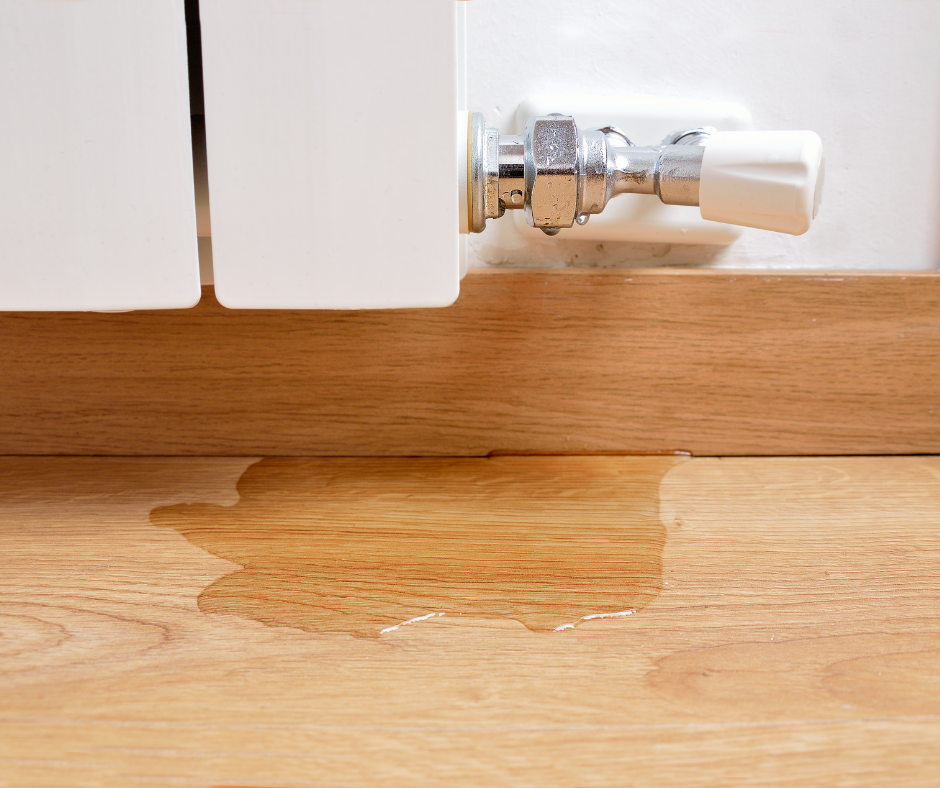
- Water-Based Stains: These stains typically result from spills of water or water-based liquids like tea or coffee. They may appear as discolored patches on the surface of the wood.
- Oil-Based Stains: Oil-based stains occur when substances like cooking oil, grease, or wax penetrate the wood’s surface. They often leave behind dark, oily marks that can be challenging to remove.
- Ink Stains: Ink stains can occur from accidental spills of ink or markers. They tend to leave behind dark, pigmented spots on the wood, which can be particularly stubborn to remove.
- Pet Stains: Pet accidents, such as urine or vomit, can cause stains and odors on wooden floors. These stains may penetrate the wood and require thorough cleaning and deodorising to eliminate completely.
Assessing The Damage
It’s essential to assess the extent of the damage on your wooden floors. Here’s a step-by-step guide to help you accurately evaluate the situation:
- Type of Stain: Begin by determining the nature of the stain. Is it caused by water, oil, ink, or pet accidents? Understanding the stain’s composition will inform your approach to removal.
- Depth of the Stain: Next, assess whether the stain has merely affected the surface of the wood or has penetrated deeper into the wood fibers. Superficial stains are generally easier to remove, while deeply ingrained stains may require more intensive treatment.
- Inspect the Surrounding Area: Take a closer look at the area surrounding the stain. Are there any signs of discoloration, warping, or damage to the wood? Understanding the broader impact of the stain will help you determine the appropriate course of action.
Ready to tackle those stubborn stains? Get in touch with Done Right Flooring for a free quote today!
Stain Removal Techniques
Now, let’s roll up our sleeves and tackle those stubborn stains on your wooden floors. Here are some tried-and-tested stain removal techniques to address a variety of common issues:
- Gentle DIY Remedies: Start with mild solutions like dish soap and warm water or vinegar diluted in water. Gently blot the stained area with a soft cloth or sponge, being careful not to scrub too vigorously, as this could damage the wood’s finish.
- Professional-Grade Solutions: For tougher stains or set-in marks, consider using specialised wood floor cleaners or stain removers available at your local hardware store. Here are some recommendations for products available:
- Bona Wood Floor Cleaner: This pH-balanced, residue-free cleaner is safe for use on all types of wood floors.
- Woca Intensive Wood Cleaner: A powerful, environmentally friendly cleaner that effectively removes stubborn stains and dirt from wooden surfaces.
- Selleys Rapid Stain Remover: Ideal for spot cleaning of stains and marks on wooden floors, this fast-acting formula penetrates deep to lift away dirt and grime.
- Sand and Coat: In cases where the stain persists despite your best efforts, sanding and recoating may be necessary. This involves sanding down the affected area to remove the stained or damaged wood and then applying a fresh coat of finish to restore its appearance and protect it from further damage.
- Addressing Water Stains: Water stains can be particularly tricky to remove, especially if they’ve been left untreated for an extended period. In some cases, simply applying a clear coating may not suffice, as the water damage may still be visible beneath the surface. In such instances, staining the wood to match its original color before recoating may be necessary to achieve a seamless finish.
Prevention Tips
To kepp your wooden floors, prevention is key. Here are some practical tips to help you avoid stains and keep your floors looking pristine:
- Use Protective Mats and Rugs: Place mats or area rugs in high-traffic areas, entryways, and beneath furniture to minimise direct contact between shoes, heavy objects, and the floor surface. These protective coverings act as a barrier, reducing the risk of scratches, dents, and stains.
- Wipe Up Spills Promptly: Accidents happen, but quick action can prevent spills from seeping into the wood and causing stains. Keep a clean, absorbent cloth or paper towel handy to immediately blot up any spills or drips before they have a chance to penetrate the wood fibers.
- Avoid Harsh Chemicals: All you need is methylated spirits and warm water to get the job done. Skip harsh chemicals, ammonia-based cleaners, or abrasive scrubbing pads, as they can harm the wood’s protective finish and lead to stains and damage.
- Trim Pet Nails Regularly: If you have pets, keep their nails trimmed to prevent scratches and gouges on the wood surface. Long nails can leave marks and potentially damage the finish, leading to staining over time. Additionally, place pet mats beneath food and water bowls to catch spills and drips.
- Regular Maintenance Routine: Stay proactive with routine maintenance tasks such as sweeping, vacuuming, and dry mopping to remove dirt, dust, and debris that can accumulate on the floor surface. Regular cleaning not only helps maintain the appearance of your floors but also prevents the buildup of substances that could cause staining.
Conclusion
Dealing with stains on wooden floors can be daunting, but with the right techniques, it’s manageable. Act promptly, assess the damage, and choose the right removal method.
For prevention, use protective measures and avoid harsh chemicals. With proactive care, your floors will stay beautiful for years.